AI Is Quietly Replacing the Small Talk That Holds Teams Together
MIT found that informal interaction drives team success. A 2025 study finds AI is quietly cutting those micro-moments — and a median S&P 500 firm loses $228M to $355M per year to disengagement.
- AuthorSophie Lindqvist
- ChannelDesignOps
- Filed
- Read3 min
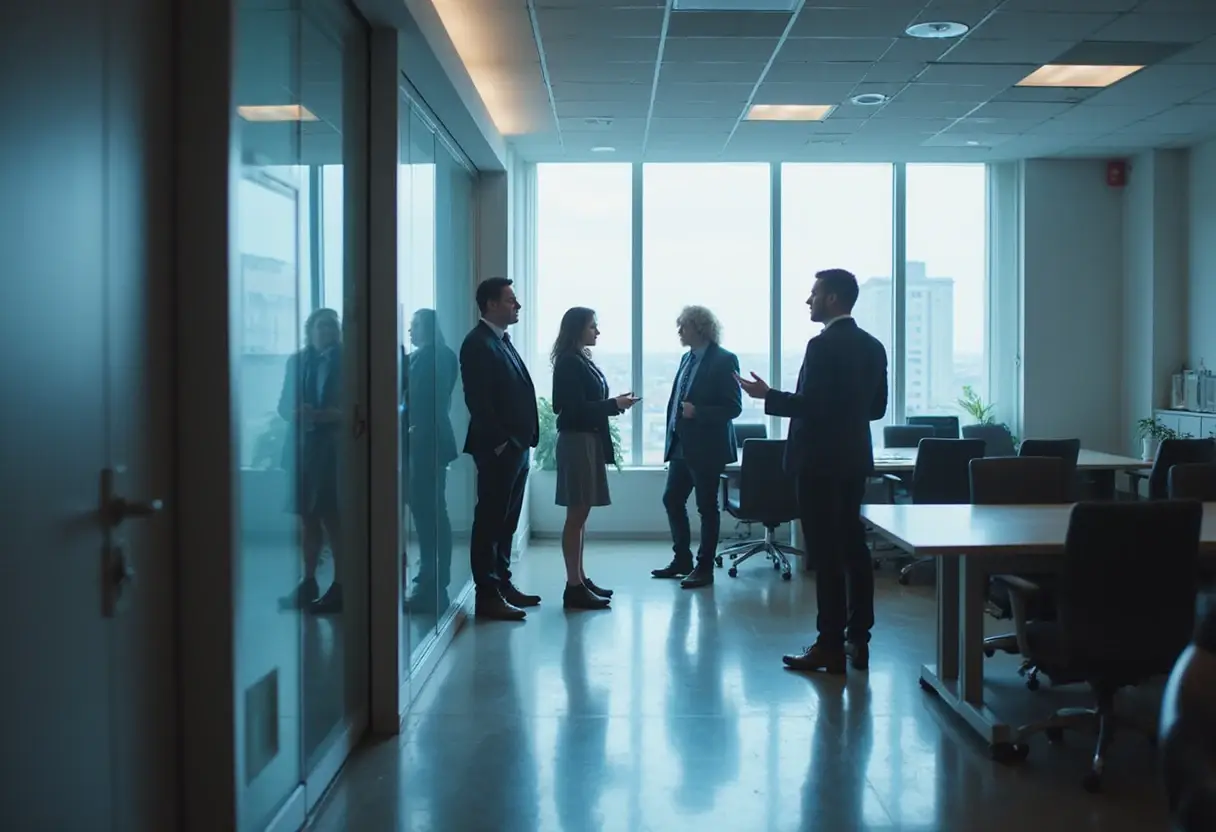
- A 2025 Harvard–Columbia–Yeshiva study linked AI-driven automation to declines in team performance, coordination, and trust.
- MIT's 2012 Human Dynamics Lab found teams with the most informal interaction delivered 35% more successful outcomes.
- Google's Project Aristotle examined 180+ teams and ranked psychological safety as the leading predictor of high performance.
- McKinsey estimates disengagement costs a median S&P 500 firm $228M–$355M annually in lost productivity.
- A March 2026 HBR study of 1,488 U.S. workers found 34% of those reporting 'AI Brain Fry' intended to quit their jobs.
Employee disengagement costs a median-size S&P 500 company between $228 million and $355 million a year in lost productivity, according to McKinsey — and a new body of research points to a likely accelerant: the small talk, quick questions, and hallway debates that AI tools now answer instead.
A 2025 study by researchers at Harvard, Columbia, and Yeshiva University examined how AI-driven automation reshaped team performance. The conclusion: team performance fell, coordination failures rose, and team trust dropped. The effects hit hardest in the short term and among lower- and medium-skilled workers.
What disappears when AI replaces the quick question?
Product designers no longer need to ask researchers to look something up; retrieval-augmented generation tools surface answers on demand. Engineers skip the accessibility team because scanners flag issues in real time. Product managers generate mockups without a designer's input. Practitioners describe the shift in one phrase: "Now I don't have to bug [someone]."
Each saved interruption looks minor on its own. Together, the exchanges form the scaffolding beneath a healthy team: the Slack thread that turns into a twenty-minute whiteboarding session, the "quick question" that surfaces a misalignment nobody had filed, the accessibility review that becomes mentorship.
What does the research say about that scaffolding?
In 2012, the MIT Human Dynamics Lab — using sociometric badges to track face-to-face contact — found that the strongest predictor of team productivity was not formal process but the energy of informal communication: hallway conversations, coffee chats, quick questions. Teams with the most such interaction delivered 35% more successful outcomes.
Google's Project Aristotle study, which examined more than 180 teams, identified psychological safety — built through frequent, low-stakes interactions — as the leading predictor of high performance. Not skill, not resources, not headcount.
A 2024 analysis of Korean high-tech firms found that weak ties — occasional contacts across functions — sustained innovative performance at companies pursuing active technological innovation.
When those interactions now route through a tool rather than a colleague, the energy, the safety, and the serendipity all shift.
Why does this hit the bottom line?
McKinsey's Great Attrition work identified the absence of belonging as one of the most cited reasons employees leave. The implication is direct: when informal micro-interactions disappear, belonging erodes and people walk.
A March 2026 Harvard Business Review study of 1,488 U.S. workers introduced a related concept: "AI Brain Fry," a form of acute cognitive exhaustion tied to heavy AI oversight. Of those who reported the syndrome, 34% intended to quit. Workers who aimed AI at repetitive toil — rather than at colleague replacement — reported 15% lower burnout and stronger peer connection, with more time spent off the keyboard.
What can practitioners change this quarter?
Treat repetitive work as the primary AI target — design-system scaffolding, log digests, accessibility sweeps — and let colleagues handle everything else. Attach the names of source experts to internal AI answers so seekers land with a person rather than a void. Run rotation programs that put product managers inside design reviews and engineers inside research synthesis, even when AI could handle the prep. Pixar director Brad Bird, reflecting on Steve Jobs's campus design: "Steve realized that when people run into each other, when they make eye contact, things happen."
Build in structured absurdity: a Bad UX Vibecoding competition, a workshop image, a self-referential generative meme. The point is to test new tools together and to bond over small failures. Think of it as the difference between clearing the inbox and clearing the room — the first buys time, the second buys trust.
The question is not whether to use AI but what kind of team AI is helping you build.
Original: hbr.org
More from Sophie Lindqvist
Show full bio
Staff writer covering people, launches and day-to-day practice in Product and interaction design, design systems at Interface Wire.
64 articles