Boston University Launches Its First Human Centered Design Degree
Boston University's College of Communication will launch the university's first degree program in Human Centered Design, teaching UX as a communication discipline.
- AuthorJames Calloway
- ChannelDesign Careers
- Filed
- Read3 min
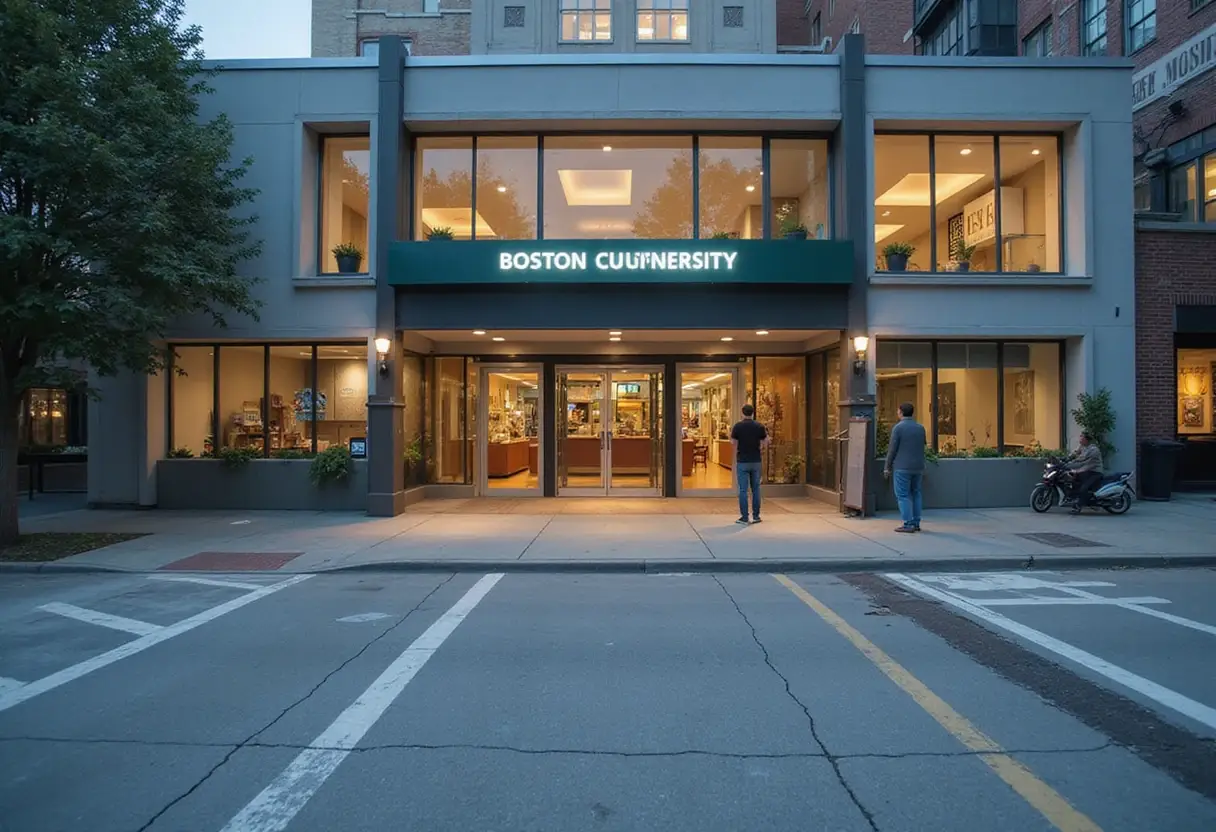
- Boston University's College of Communication will offer the university's first degree in Human Centered Design
- The program sits in COM, not an engineering or art faculty
- It is the first degree program in Human Centered Design anywhere at Boston University
- Curriculum and enrollment details have not yet been announced
Boston University's College of Communication will offer the university's first degree program in Human Centered Design, marking a structural shift in how the institution teaches the practice of building interfaces around the people who use them.
The program lands at COM — not the engineering school, not the art school. That placement is the story. Human Centered Design, the discipline that puts user research, iterative testing, and accessibility evaluation ahead of visual styling, has historically lived in technical faculties. BU has chosen to teach it as a communication discipline, alongside journalism and advertising students who will spend their careers shaping what audiences see and tap.
What does the new program signal?
For years, the industry's own hiring data has told a consistent story: teams want designers who can run a usability session, structure an information architecture, and defend a design decision with evidence rather than taste. Degree programs that teach those methods have been concentrated in a small number of schools. Every new program widens the pipeline.
Human Centered Design as a named field of study traces its methods to Don Norman's work in the late 1980s and early 1990s, when the term "user experience" entered the vocabulary at Apple. Its core loop has not changed much since:
- Research real users in their actual context
- Define the problem their behavior reveals, not the one stakeholders assume
- Prototype cheaply and test early
- Iterate against observed failures
What has changed is demand. Interfaces now mediate banking, healthcare, government services, and education. A poorly designed form in any of those domains is not an aesthetic problem; it is an access problem. When a checkout flow fails a screen-reader user, that failure maps directly onto WCAG criteria — the Web Content Accessibility Guidelines published by the W3C, currently at version 2.2 — which are increasingly written into procurement contracts and, in some jurisdictions, into law.
Graduates who can audit against those standards will not struggle for work.
Why the communication school?
The choice of COM over a technical faculty reflects an argument about what design actually is. A designer deciding where a button goes is making a claim about what the reader will understand — a rhetorical act, closer to editing than to engineering. Typography, hierarchy, and information sequencing are all communication choices before they are technical ones.
Students entering this program through a communication lens will likely lean toward content strategy, UX writing, service design, and research roles — the parts of the field where the question is not "can we build it" but "will anyone understand it."
That framing also matches where the discipline's measurable outcomes live. The Nielsen Norman Group's foundational finding — that five usability test participants uncover the majority of an interface's most severe problems — has been the field's working heuristic for decades precisely because it treats user comprehension as countable. Communication students already think in audiences; this program formalizes that instinct into method.
What comes next?
Boston University has not, in this announcement, detailed the full curriculum, faculty lineup, or enrollment numbers for the program. Those specifics will determine whether the degree produces research-fluent practitioners or portfolio-school graduates with a nicer letterhead.
Still, the direction is clear. As accessibility legislation tightens, as public services move online, and as organizations face mounting evidence that design failures carry measurable costs in abandonment and exclusion, universities are moving Human Centered Design from the margins of electives into named, credentialed degrees. BU's first such program is a small announcement with a long shadow — expect peer institutions to follow within a few admissions cycles.
Source: Google News: UX research
More from James Calloway
Show full bio
Senior reporter covering regulation, policy and their impact on Product and interaction design, design systems at Interface Wire.
63 articles