Tagbin's BRIXX Turns Prompts Into BIM Models and Rs 95 Crore Cost Sheets
At TechSparks 2026, Tagbin demonstrated BRIXX, an AI platform that generates BIM models, MEP plans and a Rs 95 crore cost estimate from natural-language prompts.
- AuthorTom Whitfield
- ChannelAI & Emerging Interfaces
- Filed
- Read3 min
- At TechSparks 2026, Tagbin Co-founders Saurav Bhaik (CEO) and Ankit Sinha (CTO) demonstrated the AI platform BRIXX.
- A live demo produced a bill of quantities estimating the showcased project at approximately Rs 95 crore.
- BRIXX consolidates architectural drawings, BIM, MEP systems and costing into one natural-language-driven workflow.
- The system accounted for soil-bearing strength and water table when generating foundations and excavation plans.
A live demonstration at TechSparks 2026 ended with a bill of quantities pricing a showcased project at approximately Rs 95 crore — a figure generated not by a quantity surveyor but by an AI platform responding to natural-language prompts.
Tagbin Co-founders Saurav Bhaik, the company's CEO, and Ankit Sinha, its CTO, presented BRIXX, an AI-powered product that consolidates architectural drawings, building information modelling (BIM), mechanical, electrical and plumbing (MEP) systems, and project costing into a single workflow. Users control the platform through plain-language prompts or by uploading an image as a reference.
"Construction is one of the least digitized industries, despite its scale. The two major problems we are trying to solve are cost and time overruns. Design systems often operate separately, with architectural drawings, MEP plans, and cost estimates unable to communicate with one another," Bhaik said.
Why conventional workflows fall short
Bhaik identified three structural problems. Conventional design processes rely heavily on two-dimensional drawings. BIM adoption remains limited because the software requires specialised expertise. Building regulations differ across Indian states and municipalities, adding further complexity.
BRIXX addresses these by letting users describe a building in plain language or supply a reference image. The platform then generates building models, incorporates applicable regulations, estimates project costs, and creates construction schedules.
What did the demonstration show?
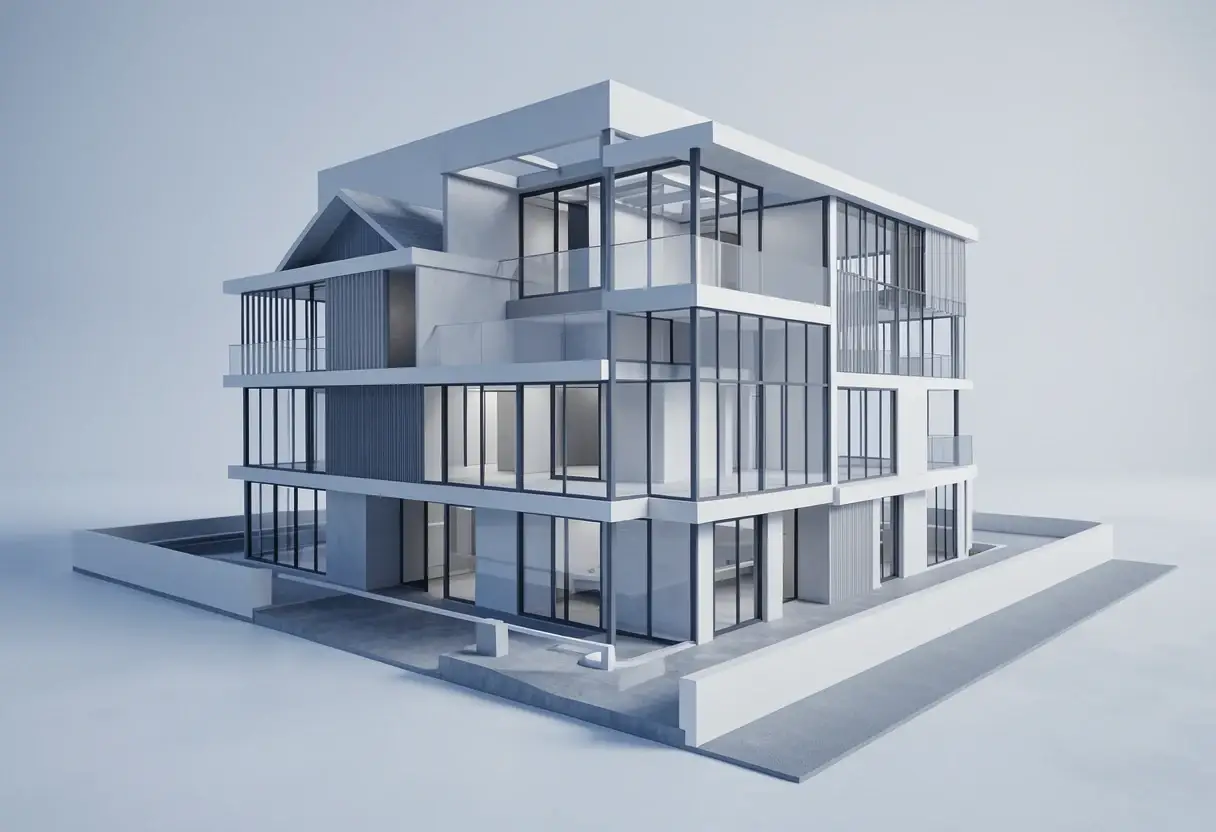
Sinha used an image reference to generate a three-dimensional BIM model complete with structural elements, foundations, and excavation plans. The system incorporated MEP components: electrical layouts, plumbing, and heating, ventilation and air-conditioning systems.
The model went beyond geometry. Unlike conventional 3D visualisations, BIM models carry information about individual building elements, including structural properties and fire ratings. BRIXX also factored soil-bearing strength and the water table into its foundation and excavation plans.
Sinha then modified the design through additional prompts. In one example, he asked the system to add a tower connected by a skybridge. The platform regenerated the model to reflect the change.
"BIM is daunting because every discipline has its own experts and tools. What we are trying to build is a solution that brings the entire ecosystem into one tool and lets you simply talk to it," Sinha said.
What does this change for design coordination?
The demonstration showed changes that would traditionally require revisions across several drawings being made through a single prompt. The platform coordinated different building systems so that a design edit propagated through connected plans rather than demanding manual rework in each discipline.
"Every element in the building needs to be accounted for, from columns and beams to electrical systems, excavation, and labour. All of this comes together in the bill of quantities. The idea is to connect the entire process, so design changes, technical requirements, and costs are reflected in one place," Sinha said.
The final output made that connection concrete: a BOQ estimating the demonstrated project at roughly Rs 95 crore — about Rs 950 million — derived from the same model the founders had edited on stage.
For an industry where cost overruns and project delays remain persistent challenges in India, the promise rests on a single source of truth. If BRIXX delivers regulated, costed, coordinated models from conversational input at production scale, the interface between architect, engineer and estimator may shift from document exchange to prompt refinement.
Source: Google News: Design systems
More from Tom Whitfield
Show full bio
Correspondent covering companies, deals and strategy in Product and interaction design, design systems at Interface Wire.
65 articles