AI Founders Claim Their Tools Solve the Problem Jobs Refused to Touch
Two AI entrepreneurs argue their tools answer the objection Steve Jobs raised about focus groups. Fortune examines the claim, the workflow it targets, and what practitioners should test first.
- AuthorSophie Lindqvist
- ChannelAI & Emerging Interfaces
- Filed
- Read3 min
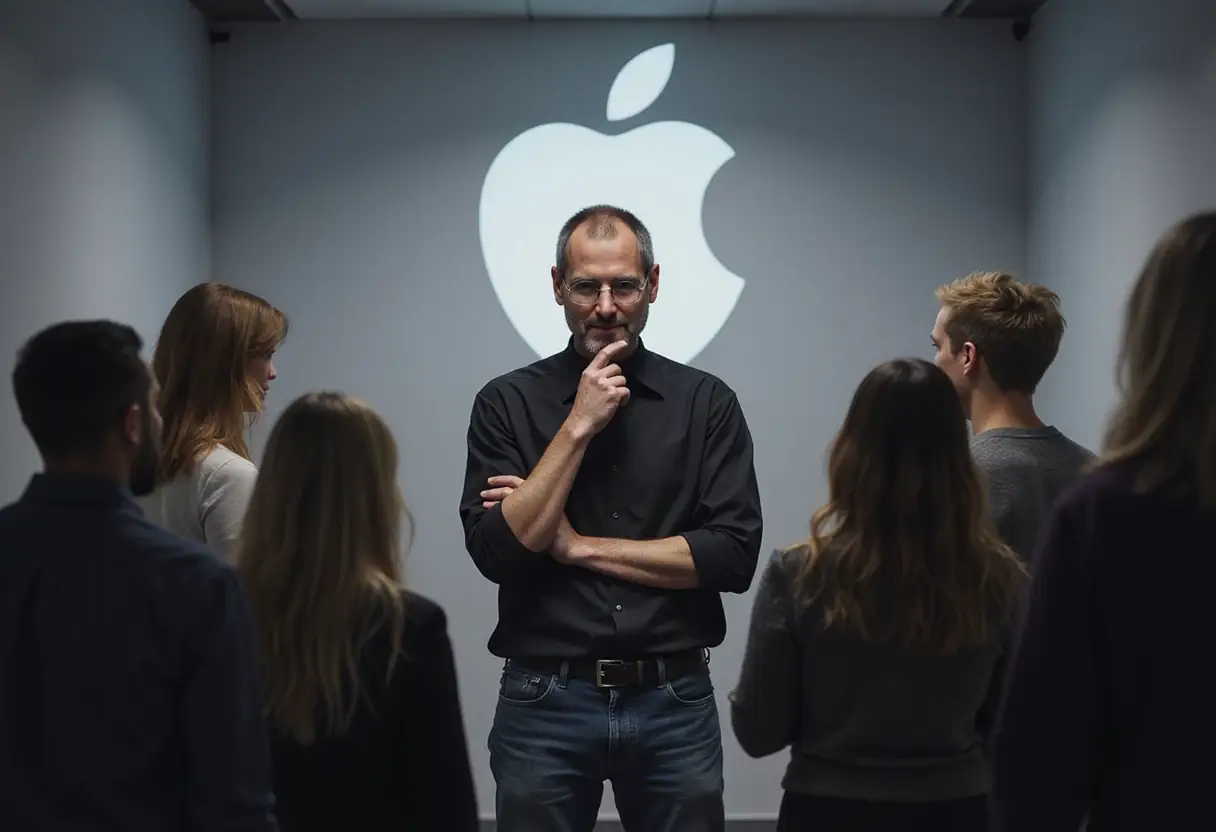
- Steve Jobs voiced skepticism of focus groups in public remarks during his second tenure at Apple in the late 1990s
- Focus groups emerged in 1940s market research and migrated to product testing in the 1960s
- Traditional focus groups typically use samples of 8 to 12 participants
- Fortune reports the AI tools position themselves as scaling the signal a focus group was meant to capture
- The tools' central claim is that the bottleneck was sample size and panel latency, not the principle of user research
By Sophie Lindqvist
Fortune reports that two AI entrepreneurs believe they have solved the design problem that led Steve Jobs to dismiss focus groups outright: how to learn what users want before they can articulate it.
What did Jobs actually object to?
Jobs's skepticism of focus groups, voiced in public remarks during his second tenure at Apple in the late 1990s, hardened into doctrine across Silicon Valley. Designers adopted the idea that user research is a lagging indicator, useful for refinement but poor at surfacing what does not yet exist. The argument targeted the group format and the self-reporting it depends on, not the principle of asking users.
The methodology Jobs rejected did not start in product design. Focus groups emerged in 1940s market research as a way to probe consumer reaction to radio programming, and they migrated into product testing in the 1960s as a faster alternative to large-scale survey work. The format is durable because it is structured: a moderator, a script, a sample of eight to twelve people, and a written summary executives can read in twenty minutes. The limits are equally durable. Eight to twelve people cannot represent a market. Self-reported preference bends to the question. Group dynamics suppress dissent.
What changes when the room disappears?
The AI tools Fortune describes change the mechanics in at least one way: they remove the room. A model that aggregates millions of behavioral traces, or that simulates respondents from a large training corpus, is not running a focus group. It runs a different kind of inference on a different kind of input. The relevant comparison is not to the eight-person panel but to a longitudinal behavioral study.
The Fortune framing presents these tools as scaling the signal a focus group was meant to capture. One approach processes large volumes of behavioral data to predict preference at the population level. Another generates synthetic respondents and tests variants against them. A third compresses the cycle from months to days. In each case, the underlying claim is that the bottleneck Jobs identified was sample size and panel latency, not the principle of asking users at all.
Where do these tools fit in a real workflow?
For design teams, the practical question is integration. Focus groups remain a default in product discovery because they are cheap, fast, and legible to non-design stakeholders. A two-hour session, a transcript, and a slide deck move decisions through committees in a way a behavioral study does not. AI tools that produce the same artifacts at lower cost could replace parts of that workflow without changing its surface appearance. The danger is the opposite: a tool that automates the format without improving its signal inherits every weakness Jobs named.
The companies also enter a research stack that already includes panel providers, usability labs, and in-house research teams. Each will evaluate the tools against one test: does the output predict what users do, or only what they say they prefer. That distinction is the one Jobs made in his criticism, and it is the one any serious evaluation will return to.
What signal should practitioners watch next?
Fortune's piece sits inside a 2024–2025 wave of AI vendors moving into research, copy testing, and concept screening. The next signal worth tracking is whether any of these companies publish comparative benchmarks against traditional methods, or whether they continue to sell on the promise that the bottleneck has moved. The history of design research suggests the answer determines which of these tools becomes infrastructure and which becomes a slide in a deck.
Source: Google News: Product design
More from Sophie Lindqvist
Show full bio
Staff writer covering people, launches and day-to-day practice in Product and interaction design, design systems at Interface Wire.
64 articles