Apple TV 4K review: A $300 streamer with uneven Siri
At $300, the fourth-generation Apple TV 4K pairs an A19 chip, 128GB storage and four-HomePod surround with inconsistent Siri. Four speakers cost $1,300 in total.
- AuthorTom Whitfield
- ChannelProduct Design
- Filed
- Read5 min
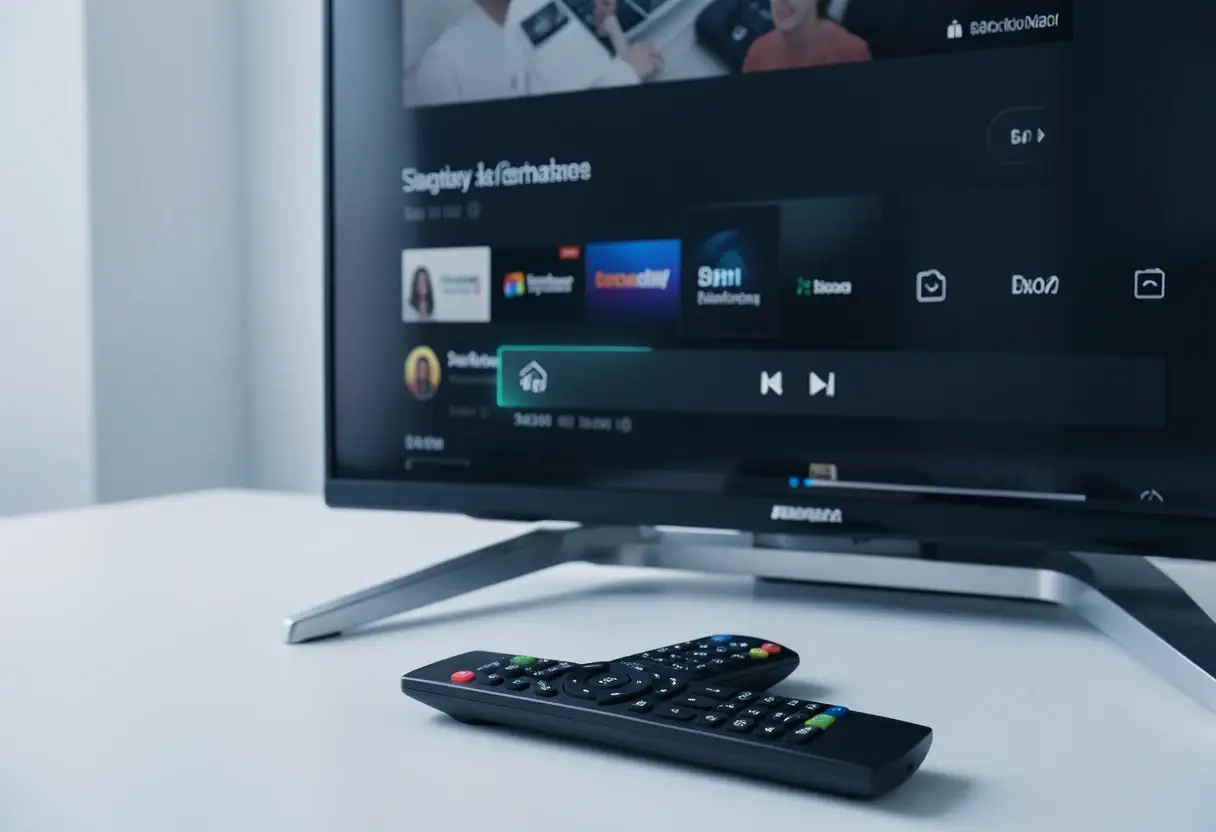
- The fourth-generation Apple TV 4K launches tomorrow at $300, two to four times competing prices.
- An A19 chip and 128GB standard storage replace the former 64GB upgrade option.
- tvOS 27.2 brings the new Siri to second- and third-generation Apple TV 4K models.
- Four-HomePod surround expands beyond Apple’s earlier two-speaker Atmos pairing.
- Two second-generation HomePods, two HomePod mini 2s, and the streamer cost $1,300.
The fourth-generation Apple TV 4K goes on sale tomorrow at $300, twice—and in some cases four times—the price of competing streaming boxes.
By Tom Whitfield
Internal upgrades without a redesign
Externally, the fourth-generation Apple TV 4K matches the 2022 model in size, finish, port count and configuration, interface, and HDR support. The A19 chip, first used in the iPhone 17, and standard 128GB storage provide the substantive hardware changes; the former 64GB upgrade option is gone.
The box retains Dolby Vision and HDR10+, a fast interface, and smooth navigation. The reviewer considers 64GB enough for most buyers and calls the new A19 chip more powerful.
The included aluminum remote retains the previous design, with USB-C charging, a side voice-activation button, and a touch-sensitive clickpad. The clickpad can be disabled in the menu if tactile clicks are unwanted.
Find My adds the practical change: the remote appears in the Find My app on a phone, where its location is pinpointed, and it can emit a sound when hidden. That helped the reviewer’s family recover remotes left in kitchens, bedrooms, and sofa cushions.
Siri’s personal context remains inconsistent
The fourth-generation box includes the new Siri, which is also coming to second- and third-generation Apple TV 4K models with tvOS 27.2. When Apple Intelligence is enabled on an iPhone or iPad on the same network, the streamer can recognize a voice and securely connect to that device for personalized answers.
In testing, Siri searched the reviewer’s messages and opened Pluribus after a friend recommended it. It also opened The Bondsman from a much older October 2025 recommendation and failed to find the intended show after the reviewer clarified that it was the message from the previous day.
Voice recognition also changed between requests. Siri answered a multi-part question about Hav & Mar, its food, its New York Times two-star accolade, and New York opening hours, then failed on a movie request from the reviewer’s wife despite the iPhone remaining nearby on Wi-Fi.
During the F1 Brazilian Grand Prix, two race requests played “Hymn of the Racers” and “São Paulo” by The Weeknd and Anitta instead of live coverage. Whitfield wrote: “Play Empire Strikes Back” started the Star Wars film on Disney Plus in seconds without naming the service.
He judged the assistant still a beta project: no worse than Alexa or Gemini on this evidence, but not differentiated from them. The new box also adds far-field microphones for requests from across a room; an on-screen indicator confirmed activation even with the streamer inside a credenza. When HomePods participate, their microphones listen through Bluetooth and determine which device responds.
Four HomePods widen the soundstage, not the overhead field
Apple supports four HomePods as a home-theater surround system, extending its earlier support for a two-HomePod stereo pair with Atmos. The configuration can mix second-generation HomePods and HomePod mini 2s, but requires matching front and rear pairs. The tested arrangement placed two second-generation HomePods in front and two HomePod mini 2s behind.
Calibration requires every speaker and the streamer to belong to the same Apple Home and share one setup user. A separate family member’s primary account kept the speakers invisible during testing. Each speaker emitted a ping and pink noise while colored ripples identified its position on the television; calibration took a couple of minutes.
After setup, any speaker can pause playback and the volume controls affect the whole system. The front pair produced a convincing phantom center channel and strong placement across the listening plane, while the surrounds defaulted to a suitable level.
Surround level can be adjusted from −8 to +8 dB in 0.5 dB increments, although the reviewer found no adjustment necessary.
The four-speaker system delivered more bass than the HomePods’ size suggested. The reviewer felt cannon fire in The Last Jedi through the floor and explosions in The Batman with impact. A dedicated subwoofer still produced deeper low-frequency output for smaller rooms and neighbors.
Some Dolby Atmos height effects remained, but they did not form a full overhead canopy in Dune and Ready Player One. In Billie Eilish’s “bury a friend,” a rhythmic drill moved across the front rather than overhead. Apple does not offer a standalone wireless subwoofer for the setup.
What does the $300 price change for buyers?
The premium buys an excellent streamer but does not add features home-theater enthusiasts have requested. Audio passthrough and 120Hz support remain absent. Apple’s strong privacy policy and lower ad load provide reasons to pay more, although the box still promoted Ted Lasso and Widow’s Bay.
The tested system cost $1,300, including two second-generation HomePods, two HomePod mini 2s, and the new Apple TV 4K. That makes reuse of existing HomePods practical, but a new surround setup starts at a premium price.
The alternative cited was a Sonos Beam Ultra with two Era 100 speakers, which offers easier expansion and stronger Atmos handling. Buyers can add a subwoofer later and use a cheaper third-generation Apple TV 4K.
Whitfield still placed the Apple TV 4K above Google Streamer, Fire TV Stick, and Roku Stick. His verdict was that it remains a premium-priced streaming device without enough practical difference from its predecessor. He concluded: “I don’t think it’s twice as better.”
Source: theverge.com
More from Tom Whitfield
Show full bio
Correspondent covering companies, deals and strategy in Product and interaction design, design systems at Interface Wire.
101 articles