Claude Motion: One Reel in 50 Minutes Versus 5.5 Human Hours
A kaye.creatives walkthrough says Claude Motion edited a talking-head reel in 50 minutes versus 5.5 human hours, while human editors led on emotional timing and transitions.
- AuthorPriya Raman
- ChannelAI & Emerging Interfaces
- Filed
- Read4 min
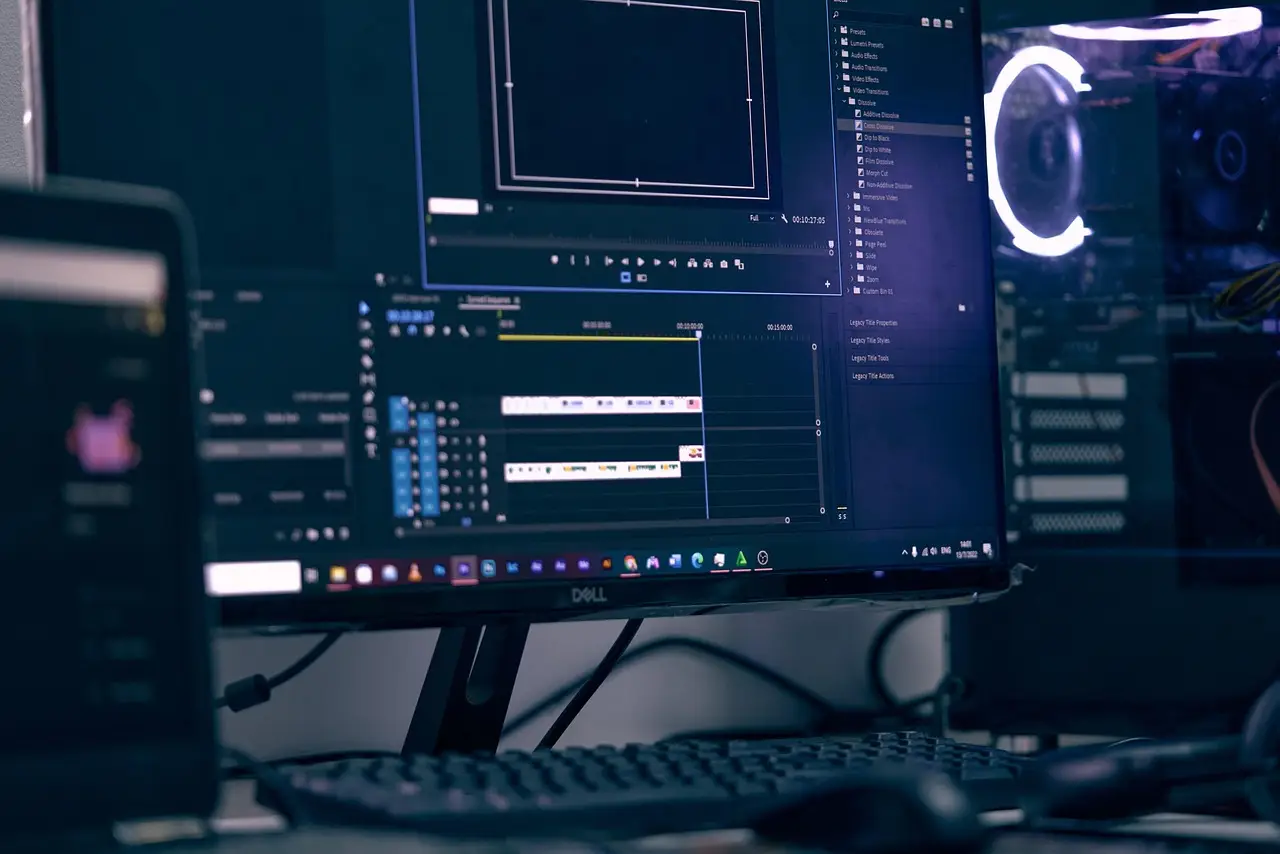
- Claude Motion completed the first of two blind tests—a talking-head reel—in about 50 minutes, versus 5.5 hours for a professional motion designer.
- Claude Motion built a full motion-graphics video from a voiceover in under an hour in the second blind test.
- Reported timelines also include 45 minutes for a full reel and as little as 20 minutes for motion reels.
- Per-reel costs were a few dollars, compared with $200 to $500 for a human-edited talking-head reel and $500 or more for a full motion video.
- The guide estimates Claude handles 80% of the editing workload and leaves the final 20% for human input.
By Priya Raman
In the first of two blind tests reported by kaye.creatives, Claude Motion completed a talking-head reel in about 50 minutes, including iterations and reference gathering; a professional motion designer took 5.5 hours.
The walkthrough presents Claude Motion as an Opus 5.5 tool for motion graphics and social-media video. It runs inside the Claude chatbot. The guide says it eliminates the need for conventional software such as After Effects or Premiere Pro, and the tests used no coding. The account provides no release date, access tier or independent evaluation, though it documents the inputs and outputs closely.
The guide estimates that Claude can handle “80% of the heavy lifting in video editing,” leaving “the final 20%” for human input. No scoring method accompanies that split, so it remains an editorial judgment rather than a measured capability ceiling.
What changes in the editing workflow?
The author tested two jobs: a talking-head reel with motion graphics, captions and B-roll, and a complete motion-graphics video built from a voiceover. Both stayed inside the chatbot, without specialized editing software or code.
The production sequence specifies what the system receives before editing begins:
- Upload raw vertical footage.
- Paste the script to guide edits and captions.
- Attach two or three visual references for style and branding.
- Attach a custom Claude Motion skill file containing preset animation rules.
The skill file supplied layout rules, spacing calculations and smooth animation curves. Claude then located the speaker’s face, cut silences, pulled frames and synchronized animations to the script. It also handled the text animations, visual clips and images that reels need.
Paired with Hastel MCP, the workflow generated AI photos and video clips and layered them into the edit, removing the need for stock footage. The guide credits that integration with saving time and adding originality, though it offers no separate measurement of either benefit.
Where did the human edit win?
Both versions of the talking-head reel had smooth transitions, synchronized captions and custom B-roll. The human cut pulled ahead on nuanced camera movement and emotional timing—two forms of editorial judgment that the walkthrough treats differently from mechanical synchronization.
In the second blind test, Claude created the full motion-graphics video from a voiceover in under an hour, using the script and references to construct its visual story. The human version offered more inventive transitions and finer detail; Claude’s remained polished enough for Instagram or Shorts.
A third, separate exercise removed the creator’s face and produced a full-screen motion-design reel from voice alone. The inputs were raw talking-head footage, a folder of motion-design references and a custom skill file. Hixel MCP generated fresh AI B-roll, avoiding overused stock clips. The guide names Hastel MCP and Hixel MCP without explaining the difference.
The human editor added micro-bounces and 3D transitions, giving the edits a distinctive personal touch. Claude could reproduce the mechanics of synchronization, but not those choices, in this account.
What do the time and cost figures show?
The stated advantages cover four production variables:
- Speed: The walkthrough says a full reel took 45 minutes, allowing up to five videos in the time normally spent making one.
- Consistency: It describes uniform quality across multiple projects.
- Cost: A regular subscription and AI credits cost a few dollars per reel, compared with $200 to $500 for a human-edited talking-head reel and $500 or more for full motion videos.
- Revisions: Creators can request iterations and generate fresh AI B-roll on demand.
Read those figures narrowly. The account also promises motion reels in as little as 20 minutes, but it does not name the subscription tier, the AI-credit allowance or the labor assumptions behind the per-reel cost. It also never reconciles the 20-minute, 45-minute, 50-minute and under-an-hour measurements, which may describe different tasks.
Where does manual control break down?
The author treats a first version as a rough draft, even when a human editor makes it. Claude has no manual control: adjustments require re-prompting, which can make fine-tuning slow. Weak references yield generic results, and the tool struggles to interpret abstract ideas or innovate.
The first talking-head draft shows the limits. Its opening five seconds felt too slow, the top-card headline was too small, and the middle section held on the speaker’s face for four seconds without enough motion. Adding more visual references for that section produced a second version that resolved those problems. The repair depended on better direction, not direct manipulation.
Who should use it?
The strongest case belongs to creators producing high-quality social-media video quickly and cheaply, including people without editing experience. The walkthrough also says professional editors can accelerate and scale production without compromising quality, but projects dependent on abstract concepts, emotional nuance or highly customized transitions still need human judgment.
The walkthrough does not claim full replacement for human editors, and one creator’s account cannot establish a general performance guarantee: it reports two blind comparisons but gives no viewer count, scoring rubric or repeated-trial results. Its timings and revision examples still offer concrete evidence about a production workflow.
The article also discloses that some links may earn Geeky Gadgets an affiliate commission, a commercial detail that belongs in the reader’s assessment.
Source: geeky-gadgets.com
More from Priya Raman
Show full bio
Market editor covering technology and product news in Product and interaction design, design systems at Interface Wire.
86 articles