Hyundai Opens Shanghai UX Research Hub to Study In-Vehicle Interfaces
Hyundai Motor Group has opened a user experience research hub in Shanghai, Automotive World reports, extending the group's design research footprint into China's largest passenger vehicle market.
- AuthorTom Whitfield
- ChannelUX Research
- Filed
- Read3 min
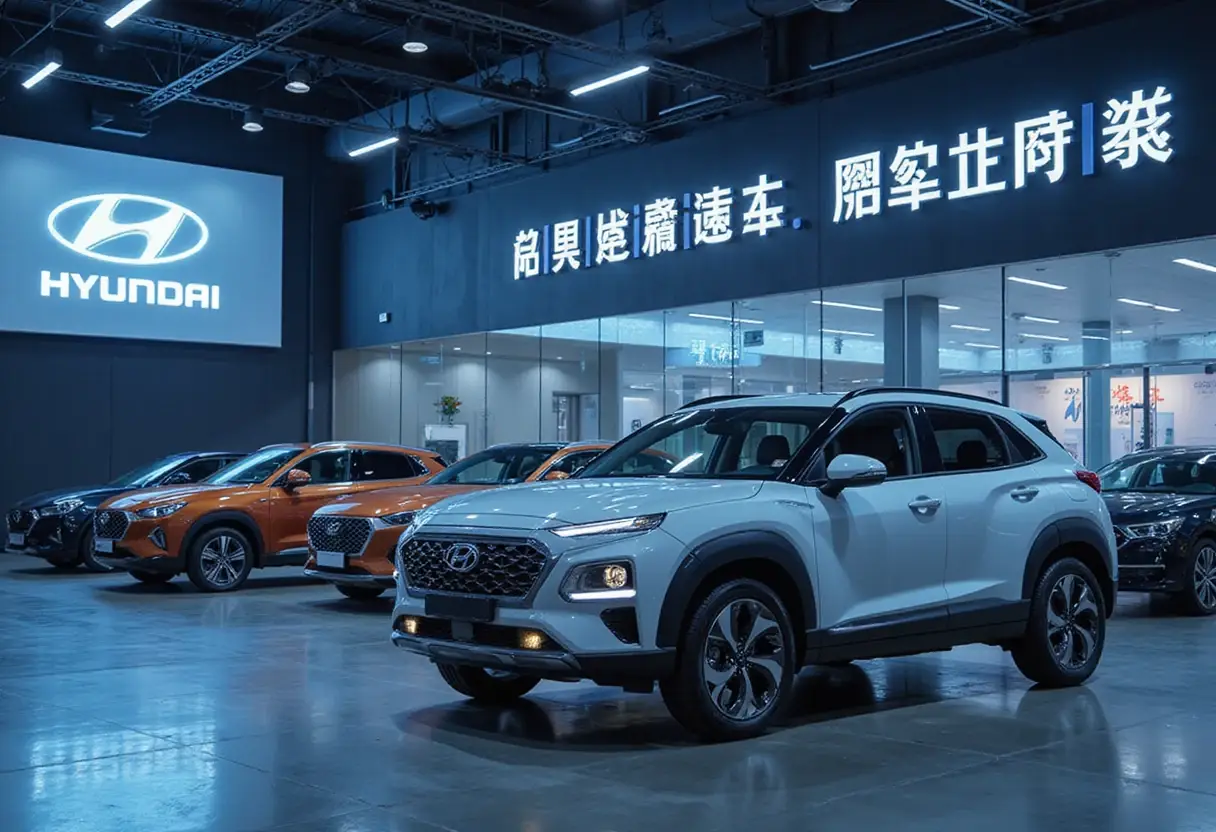
- Hyundai Motor Group has opened a user experience research hub in Shanghai, Automotive World reports.
- The facility extends Hyundai's UX research footprint into China's largest passenger vehicle market.
- Shanghai hosts more than 24 million residents and one of the world's densest connected-vehicle user populations.
- The research hub joins an existing cluster of automotive UX laboratories already operating in Shanghai.
- Automotive World did not disclose a headcount, opening date, or capital figure for the new facility.
Hyundai Motor Group has opened a user experience research hub in Shanghai, Automotive World reported this week. The facility extends the automaker's design research footprint into China's largest passenger vehicle market.
The new facility places the group's UX researchers inside a city with more than 24 million residents and one of the world's densest concentrations of connected-vehicle users. That proximity shortens the feedback loop between design concept and in-cabin prototype. It also enables longitudinal studies with drivers who treat smartphone mirroring and voice assistants as baseline expectations.
For practitioners, the operational change is method. In-house usability sessions conducted in Mandarin, on local roads, with participants drawn from the Shanghai catchment area yield findings that aggregated global testing cannot replicate. Gesture tolerances, glare recovery times, and screen reading distances vary by locale, and an in-region lab reduces the translation step that often smooths those differences out of published data.
The hub joins a cluster of automotive UX laboratories already operating in Shanghai. Tier-1 suppliers including Harman, Aptiv, and Desay SV maintain human-machine interface development teams nearby. Multiple premium automakers also operate UX groups in the city, and the clustering matters because prototype vehicles, electrical architectures, and usability facilities share a supply chain.
What does this change for the design reader building global products?
It shifts the source of regional usability data. Hyundai's published research outputs going forward will likely include findings drawn from Shanghai-resident participants, which means designers can calibrate component libraries and shared design systems against locale-specific evidence instead of averaged international benchmarks. Designers responsible for international rollouts should watch for separate China-market usability reports alongside the group's existing global findings.
Regional UX research also surfaces friction points invisible in aggregate studies. Right-hand-drive configurations, road sign typography, lane discipline norms, and parking behaviour all alter the cognitive load drivers bring to secondary tasks. A dedicated Shanghai lab gives Hyundai the participant base to test these conditions in situ rather than infer them from simulation.
The research scope at a dedicated automotive UX hub typically spans formative studies, summative usability tests, eye-tracking sessions, and on-road driver behaviour observation. Output feeds three downstream artefacts: interaction pattern libraries, component specifications, and safety compliance documentation tied to standards such as ISO 15005 for in-vehicle visual presentation and ISO 17287 for simulated driving tasks.
WCAG 2.2 success criterion 2.5.1 on pointer gestures, alongside the ISO 9241-210 human-centred design process, remain the technical reference points for digital interface work. What shifts is the geographic origin of the empirical evidence feeding those standards inside Hyundai's product organisation.
The strategic timing carries weight. Chinese original equipment manufacturers accelerated software-defined vehicle investment through 2023 and 2024, and Hyundai's E-GMP platform already supports over-the-air updates across its Ioniq 5 and Ioniq 6 lines. A UX research base inside Shanghai positions the group to study competitor infotainment patterns, gesture interfaces, and digital cockpit layouts at first hand rather than through secondary reports.
Automotive World did not disclose a headcount, opening date, or capital figure for the new facility. Those three data points will determine whether the hub operates as a satellite research studio feeding Seoul or a peer to Hyundai's Namyang R&D headquarters in South Korea. The answer will surface in the granularity of locale-specific findings the group publishes over the next 18 to 24 months.
Source: Google News: UX research
More from Tom Whitfield
Show full bio
Correspondent covering companies, deals and strategy in Product and interaction design, design systems at Interface Wire.
65 articles