Ring's $249.99 Flying Drone Cam Brings Mobile Surveillance Indoors
Ring Robotics announces a $249.99 indoor Drone Cam with 2K video and a $999.99 commercial Rover Cam robot, shipping December 2026 and January 2027.
- AuthorJames Calloway
- ChannelProduct Design
- Filed
- Read4 min
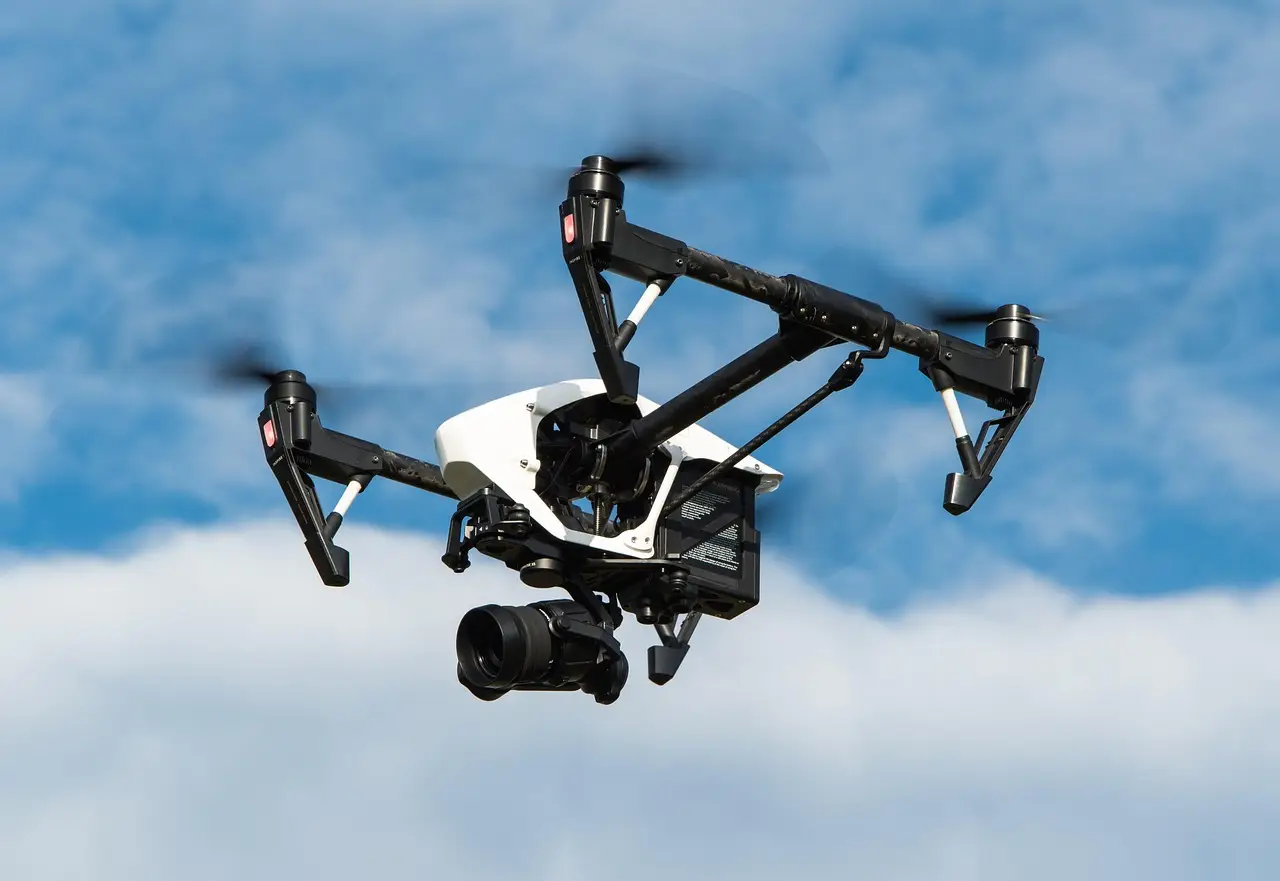
- Ring Drone Cam costs $249.99, records 2K video at 148 degrees, and ships January 27, 2027 pending FCC clearance
- Ring Rover Cam costs $999.99, patrols up to 5,000 sq ft with a 4K periscope camera, and ships December 16, 2026
- The Drone Cam weighs 165 grams and records only during flight, with a shuttered lens while docked
- Both devices use cloud-connected AI Pilot navigation to map floor plans and respond to security alerts
- Initial availability is US-only, with UK and Europe expansion planned subject to local regulations
Ring has priced its first autonomous indoor flying camera at $249.99, with the Drone Cam slated to ship on January 27, 2027, pending final FCC clearance. The announcement, made under the company's new Ring Robotics brand, also introduced a second machine: the $999.99 Rover Cam, a ground-based patrol robot for commercial spaces that arrives earlier, on December 16, 2026.
Both devices mark a deliberate shift away from fixed-position cameras toward mobile, AI-driven surveillance for homes and businesses. A first-look video from The Tech Chap shows the hardware in action, and the spec sheet tells the story of how far cloud offloading can shrink a security device.
What does the Drone Cam actually do?
The Ring Drone Cam is a compact flying camera designed for single-story homes. It records in 2K resolution through a 148-degree wide field-of-view lens, and it flies to where the action is rather than waiting for it to enter a static frame.
The interaction model centers on three modes:
- Scheduled patrols — users define flight routes in advance, and the drone runs them on a timetable
- Alert-triggered flights — other Ring devices can summon the drone when they detect something
- Manual control — real-time piloting for live monitoring from any angle
Physical autonomy matters here. The drone docks and charges itself automatically, which removes the battery-anxiety problem that has stalled indoor drones before. The privacy design follows the same logic in reverse: recording is active only during flight and disabled while the device sits docked, with a shutter covering the lens.
There's one hard limitation. The Drone Cam cannot navigate multi-story environments yet, so Ring positions it for apartments, bungalows, and single-level homes. That constraint frames the device less as a whole-home replacement and more as a mobile verification tool that flies to check what a stationary camera or doorbell flagged.
Who is the $999.99 Rover Cam for?
The companion product skips the consumer market entirely. The Ring Rover Cam is a ground robot built to patrol commercial floors — warehouses, offices, retail spaces — up to 5,000 square feet in size.
Its hardware reads like a checklist drawn from real security-operations needs:
- A periscope camera that rises to give elevated sightlines across racking and shelving
- 4K video capture for identifiable footage at distance
- Two-way audio so operators can speak directly with people on site
- An integrated light tower and siren to deter intruders
- Infrared night vision for continuous 24/7 operation
When it isn't moving, the Rover Cam behaves like a conventional fixed camera, monitoring from its dock on a set schedule or in response to triggers. One device therefore covers both the patrol and the post.
How do both robots navigate?
Both machines run on cloud-connected mapping software that Ring calls AI Pilot navigation. The devices build maps of their floor plans, adapt to their surroundings, and route themselves in response to automated security alerts — no joystick work required for routine operation.
The cloud architecture is what makes the form factors viable. By offloading processing rather than running it on-device, Ring keeps the hardware light and energy-efficient. The Drone Cam weighs just 165 grams, roughly the heft of a smartphone, which is what allows it to maneuver indoors without sounding like a kitchen appliance.
That trade-off cuts both ways, of course. Cloud-dependent navigation means the robots' core intelligence lives on Ring's servers, tying their smartest functions to connectivity and to the company's ongoing software support.
What about pricing and availability?
The split is straightforward. The Drone Cam lands at $249.99, a price point that puts mobile aerial monitoring within reach of ordinary homeowners rather than enterprise buyers. The Rover Cam's $999.99 tag reflects its commercial remit and heavier hardware load.
Shipping starts in the United States, with the Rover Cam first on December 16, 2026 and the Drone Cam following on January 27, 2027 — the latter contingent on FCC clearance. Ring says it plans to expand availability to the UK, Europe, and other regions, subject to local regulations, which for flying camera hardware is a meaningful caveat rather than boilerplate.
Taken together, the two machines sketch a clear trajectory: surveillance is shifting from many dumb fixed eyes toward few mobile, cloud-piloted ones, and if Ring's dates hold, the first mass-market version of that model will be hovering in living rooms just over a year from now.
Source: geeky-gadgets.com
More from James Calloway
Show full bio
Senior reporter covering regulation, policy and their impact on Product and interaction design, design systems at Interface Wire.
99 articles