Amazon's $249 Ring Drone Cam Flies Into a Shrinking Burglary Market
Amazon's $249 Ring Drone Cam ships in January with 8 minutes of flight time — aimed at a US burglary rate that just fell 15.8% year over year to a record low.
- AuthorRebecca Stone
- ChannelProduct Design
- Filed
- Read3 min
- The Ring Drone Cam ships in January at a starting price of $249.
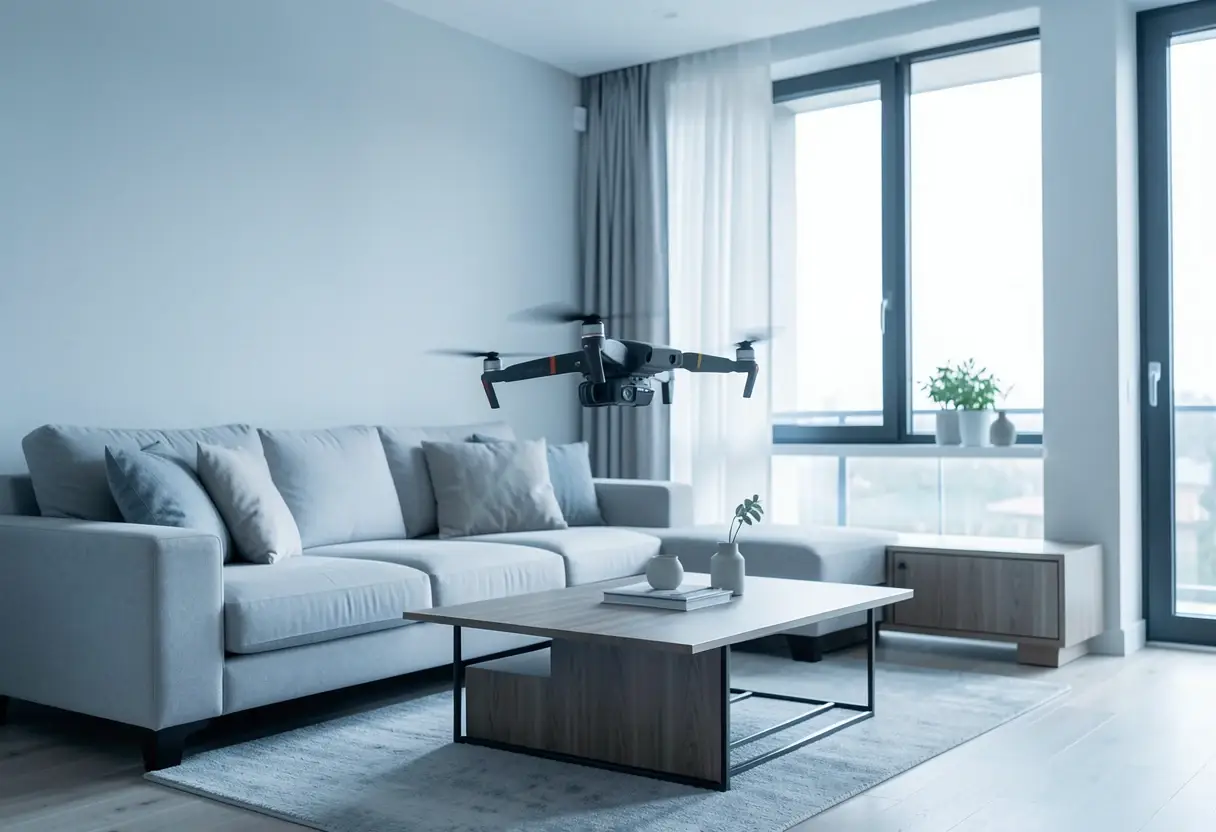
- The drone has 8 minutes of flight time and flies preset patrol paths indoors.
- FBI 2025 statistics show burglary down 15.8% from the previous year, to 194 per 100,000 inhabitants.
- The burglary rate was about 732 per 100,000 in 2006 — a decline of roughly 73% since.
- The drone launches automatically when a security alarm or alert goes off.
By Rebecca Stone
Amazon's Ring Drone Cam ships in January at $249, flies for 8 minutes at a time, and lands in a market where burglary just hit its lowest recorded rate in the United States. That collision — a new indoor surveillance gadget meeting a decades-long crime decline — is the real story behind the launch.
What does the device actually do?
The drone flies preset patrol paths inside your home while you're away. When its 8 minutes of flight time run out, it returns to a charging dock, camera off. It takes flight automatically when a security alarm or alert triggers.
Amazon's demo video shows the device's light scaring off burglars lurking in bushes or testing a door. One detail from the marketing: among the beanie-clad burglars, one is a woman. A small gesture of inclusivity in an ad about home invasion.
The pitch, per Amazon, targets people who want to monitor their home's interior without installing multiple fixed cameras. Not the fortress crowd. The security-curious.
Who is this for?
That's the question the launch struggles to answer. The likely buyer — someone already anxious about security — probably owns Ring doorbells and outdoor cameras already, since the drone works alongside that exterior gear. And the people with genuine, high-stakes security needs, like public figures, judges, or people with stalkers, presumably run systems far more robust than a consumer drone.
At $249, the device sits nowhere near the high end of security spending. It replaces, in theory, a spread of indoor cameras with one flying unit. That's the honest value proposition: fewer lenses on walls, one lens in the air.
What do the numbers say about burglary?
The FBI's 2025 national crime statistics report burglary down 15.8% from the previous year. The trend runs back to 2006, when the rate stood near 732 per 100,000 inhabitants. The current figure: 194, a new low. Researchers credit the spread of electronic home security systems and video surveillance, including Ring's own cameras and doorbells, as a major factor.
So the gadgets appear to be working. Burglary has fallen roughly 73% in under two decades. Which makes a flying indoor patrol drone feel less like a necessity and more like a solution searching for a remaining problem.
Are there everyday uses?
Pet monitoring is the obvious candidate, and the most dubious. Most cats and dogs would likely find a loud buzzing object circling the living room somewhere between alarming and infuriating. A fixed camera does that job silently.
The author of the original report puts it plainly: as a hamster owner with a moderate attitude toward home security, they just can't see the appeal. Their own Ring video doorbell earns its keep for package deliveries, and an outdoor garage camera once captured a black bear in the driveway — exciting, but not evidence for an indoor drone.
What happens next?
The device reaches buyers in January at $249. Whether the security-curious — a market defined by hesitation rather than commitment — will pay drone prices for 8-minute patrols is the test Amazon has now set for itself, in a country where the crime it guards against keeps shrinking.
Source: feeds.businessinsider.com
More from Rebecca Stone
Show full bio
News editor covering technology and product news in Product and interaction design, design systems at Interface Wire.
95 articles